
AED Awareness: Why Access and Training Matter
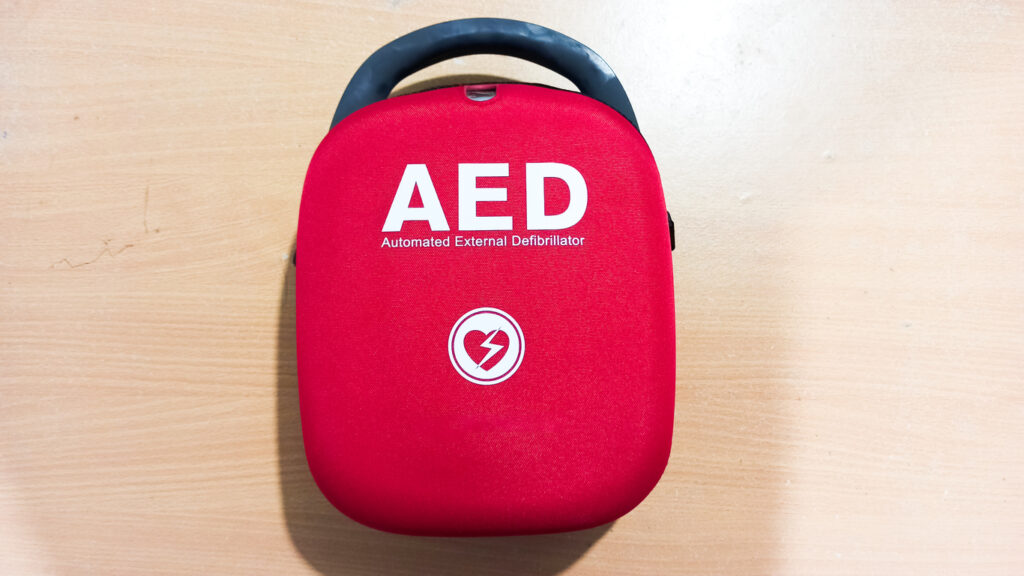
AED Use & Its Importance
Every second counts during a cardiac emergency. When sudden cardiac arrest (SCA) occurs, survival depends on two critical factors: immediate CPR and rapid defibrillation. An Automated External Defibrillator (AED) can mean the difference between life and death — but only if it is accessible and people are trained to use it.
AED awareness is not just a healthcare issue. It is a community safety priority. For aquatic facilities, recreation centers, schools, sports complexes, HOAs, and municipal properties, AED readiness is a responsibility that directly aligns with public trust and operational excellence.
This article outlines why AED access and training matter, and what organizations can do to build safer communities.
Understanding Sudden Cardiac Arrest
Sudden cardiac arrest is not the same as a heart attack.
-
Heart attack: A circulation problem caused by a blocked artery.
-
Sudden cardiac arrest (SCA): An electrical malfunction that causes the heart to stop beating effectively.
When SCA occurs:
-
Blood flow to the brain and organs stops.
-
The person collapses.
-
Survival decreases by 7–10% per minute without defibrillation.
-
Brain injury can begin within 4–6 minutes.
Emergency medical services (EMS) response times often exceed this critical window which is why bystander intervention is essential.
What an AED Does
An Automated External Defibrillator is a portable device that:
-
Analyzes heart rhythm
-
Determines if a shock is needed
-
Delivers a controlled electric shock to restore a normal rhythm
AEDs are designed for public use and include:
-
Clear voice prompts
-
Visual instructions
-
Automatic rhythm analysis
-
Built-in safety mechanisms
You cannot accidentally shock someone unless the device detects a shockable rhythm.
The technology is advanced — but simple to operate. The true barrier is not complexity; it is awareness and training.
Why AED Access Matters
An AED locked in an office, stored in a back room, or placed in an unmarked cabinet does not save lives.
Access means:
-
Clearly visible placement
-
Publicly known location
-
Unrestricted availability during operating hours
-
Regular maintenance checks
High-Risk Environments That Require AEDs
-
Aquatic centers and pools
-
Fitness facilities
-
Schools and youth sports venues
-
Senior centers
-
Community recreation centers
-
Event venues and gathering spaces
-
HOA clubhouses
-
Waterparks and surf parks
Aquatic environments require particular attention. Drowning incidents can lead to cardiac arrest. High-exertion activities and heat exposure increase cardiac stress. Facilities that host large groups must be prepared.
If your facility serves the public, AED access is not optional, it is essential.
Why AED Training Matters
Having an AED on site is step one. Ensuring people know how to use it is step two.
Training provides:
-
Confidence in an emergency
-
Reduced hesitation
-
Faster response time
-
Proper CPR technique
-
Coordinated team response
The Confidence Gap
Many bystanders hesitate because they fear doing something wrong or causing harm. Some worry about legal consequences or believe they lack the skill set to respond appropriately.
While Good Samaritan laws in many states provide protection for those who act in good faith, uncertainty often delays action.
Training eliminates hesitation. It replaces fear with competence.
When staff practice recognition, response, and AED deployment, they become prepared responders, not passive observers.
The Critical Link: CPR + AED
Defibrillation works best when combined with high-quality CPR.
Cardiopulmonary resuscitation (CPR):
-
Keeps oxygenated blood circulating
-
Preserves brain function
-
Increases the likelihood that a shock will be effective
When CPR is paired with AED use, survival rates increase dramatically.
Communities with strong bystander CPR and AED programs report survival rates two to three times higher than those without coordinated training initiatives.
Training programs should always teach CPR and AED skills together.
Legal Protection and Risk Management
Many states have Good Samaritan laws protecting individuals who use an AED in good faith during an emergency. However, organizations still carry responsibility for:
-
Maintaining devices
-
Replacing expired pads and batteries
-
Ensuring accessibility
-
Providing appropriate staff training
-
Following local regulatory requirements
From a risk management perspective:
-
AED programs reduce liability exposure.
-
Documented training demonstrates due diligence.
-
Clear emergency protocols reduce operational chaos.
A well-structured AED program is not just lifesaving, it is operationally responsible.
Final Thought
An AED is more than a device mounted on a wall. It represents preparedness, leadership, and a commitment to community safety.
When access is immediate and training is consistent, organizations create environments where rapid response is possible and possible response saves lives.
If your facility has not recently reviewed its AED placement, maintenance logs, or staff certification status, now is the time.
Because in a cardiac emergency, minutes matter.
And preparation determines outcomes.
Our Affiliates